Monday, January 19, 2026
From jQuery Spaghetti to React: 600% Faster WooCommerce Using Hybrid WP + React
 Akash Aman
Updated: February 2026





🏛️ Deconstructing
Twelve years is an eternity in software. ⏳ In the world of e-commerce, a 12-year-old WooCommerce stack isn't just a codebase; it’s an archaeological site. 🏺 Layers of AJAX, tangled jQuery callbacks, and legacy PHP hooks form a "monolithic beast" 👹 that keeps the business running but makes every new feature a gamble. 🎲
When the time came to modernize, the directive was clear: Migrate to React. ⚛️ But as any Senior Engineer will tell you, a "Big Bang" migration—shutting down the old and launching the new in one go—is often a recipe for disaster. 💥
The Case Study: The "All-at-Once" Trap 🪤
The primary challenge wasn't just the code; it was the sheer scale of the unknown. 🏔️ Attempting to decouple a system this old presents two massive roadblocks:
- Cognitive Load: 🧠 You cannot possibly map every dependency and edge case of a 12-year-old system before you start designing the new one.
- Feature Parity: ⚖️ If you design a completely decoupled system from scratch, you lose the ability to migrate incrementally. You’re stuck in a "dark period" for months where no value is delivered to the user. 🌑
The "Aha!" Moment: Micro-Frontend Injection 💡
I realized we were looking at the problem through the wrong lens. 🔍 We didn't need to replace the entire page; we needed to replace the experience, chunk by chunk. 🧩
The fundamental superpower of React is its ability to mount itself anywhere. ⚡ It doesn't care if the rest of the page is a mess of legacy PHP and jQuery; it only cares about its designated <div>.
The Strategy: Solving by Subtraction ➖
Instead of a total rewrite, we shifted to a "Strangler Pattern" approach 🌿 using React's core injection logic:
- Identify the Friction: 🔥 Find the most interactive, performance-critical sections (e.g., the cart, product filters, or checkout).
- The Target
<div>: 🎯 Inject a container into the legacy WooCommerce template. - The Handshake: 🤝 Use React to take over that specific DOM node while letting the legacy system handle the rest of the page (like headers and footers).
- Iterative Decoupling: 🔄 As more pieces move to React, the "glue" code eventually becomes the new foundation.
By splitting the problem into manageable chunks, we didn't just make the system more performant—we made the migration survivable. 🏆
The Technical Hurdles: Fluidity vs. Rigidity 🚧
Integrating React into a 12-year-old system wasn't just about rendering components; it was about rewriting the laws of navigation. 🗺️ We faced two primary "architectural blockers":
-
The "Ghost of the Refresh" (State Persistence) 👻
- In a traditional WooCommerce setup, every click triggers a full page reload, wiping the slate clean. Our goal was to implement React Router to enable seamless, "app-like" transitions. However, maintaining a consistent state (like a half-filled checkout form or a filtered product list) while moving between React-heavy pages and legacy PHP fragments felt like trying to keep a fire lit in a rainstorm. 🌧️
-
The Dynamic Routing Conflict 🚦
- WordPress is the "Source of Truth" for URLs. 📚 If an admin changes a page slug in the dashboard, the frontend must respect that change instantly. Standard React SPAs usually define routes at build-time, but we needed a system where the frontend could "swallow" WordPress paths dynamically, 📥 without requiring a code rebuild or a deployment every time a URL changed.
The Experiment: Hacking the Router 🧪
I treated this as a research project, diving deep into the internals of modern routing and state persistence. 🔬 My "laboratory" phase focused on three key areas:
-
Deconstructing TanStack Router 🥞
- I spent days digging into the TanStack Router ecosystem. It is famously powerful for type-safe, build-time routing, but I needed to know if I could bend it to my will. 🛠️ I investigated how its dependency tree is constructed and whether I could inject routes at runtime rather than compilation.
-
The Quest for Runtime Flexibility: A Strategic Pivot ↩️
- The core question was: Can we make the route configuration dynamic? Initially, I explored fetching a "route map" from the WordPress REST API. However, this created a noticeable lag—React had to wait for the API response before it could even begin to resolve the route. ⏳
- The Solution: 💡 I shifted to injecting a JS configuration object directly into the page via a PHP template. By globally exposing this variable before the React scripts even loaded, the routing data was available instantly upon initialization. This allowed the WordPress backend to dictate navigation logic without sacrificing performance. 🚀
-
Persistence Strategy 🔋
- Since we were operating in a "hybrid" environment, I experimented with persistent state layers. I looked beyond simple memory-based stores and tested LocalStorage and SessionStorage bridges. 🌉 This ensured that if a user navigated to a legacy PHP page by accident, their session data would still be waiting for them the moment they hopped back into a React-driven view.
-
Building the WordPress "Control Bridge" 🕹️
- Finally, I prototyped a Configuration Sync plugin. This served as the command center for the entire migration. It didn't just format WordPress page paths into a JSON structure for React; it offered a granular way to manage conditional loading.
- Through the plugin, we could specify exactly which React modules should load on specific backend pages. This gave us the power to migrate the site "piece by piece" with surgical precision, 🔪 keeping the bundle sizes small and the management overhead low.
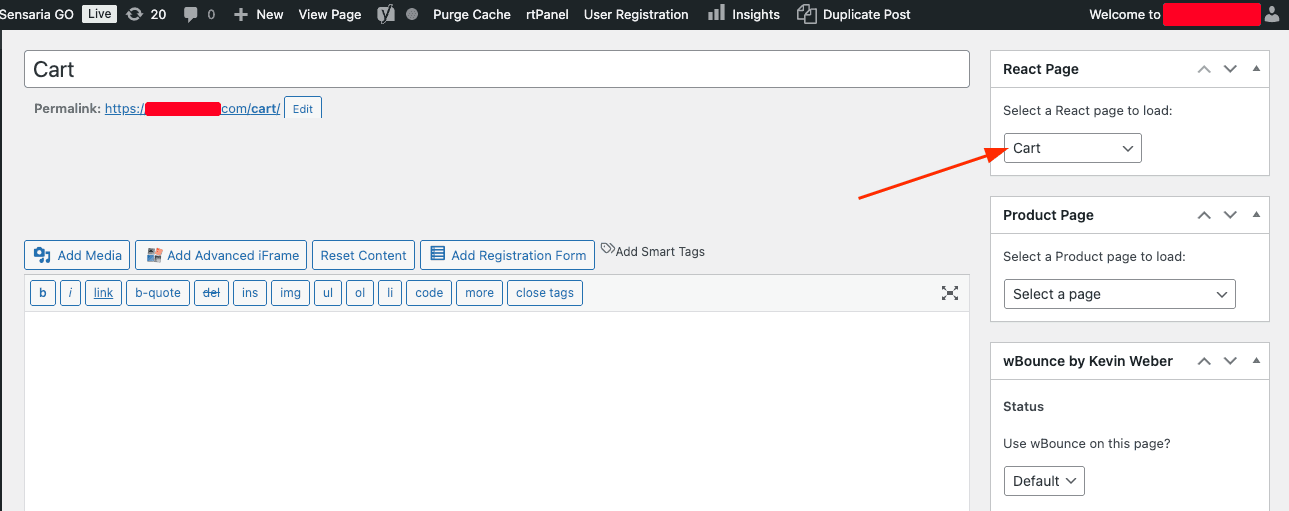
🎯 The Final Plan
Seeing the massive improvement in the initial tests, I engineered a sustainable, long-term architecture: 🏗️
- Dynamic Routing: A custom system that handles navigation between pages by syncing the WordPress backend configuration with the frontend. 🔄
- Chunk Management: A routing manager that ensures only the necessary React chunks load on specific pages, keeping the site lightweight. 📦
- The Incremental Shift: Instead of a risky "all-at-once" launch, we are migrating pages from jQuery to React one by one. 📈
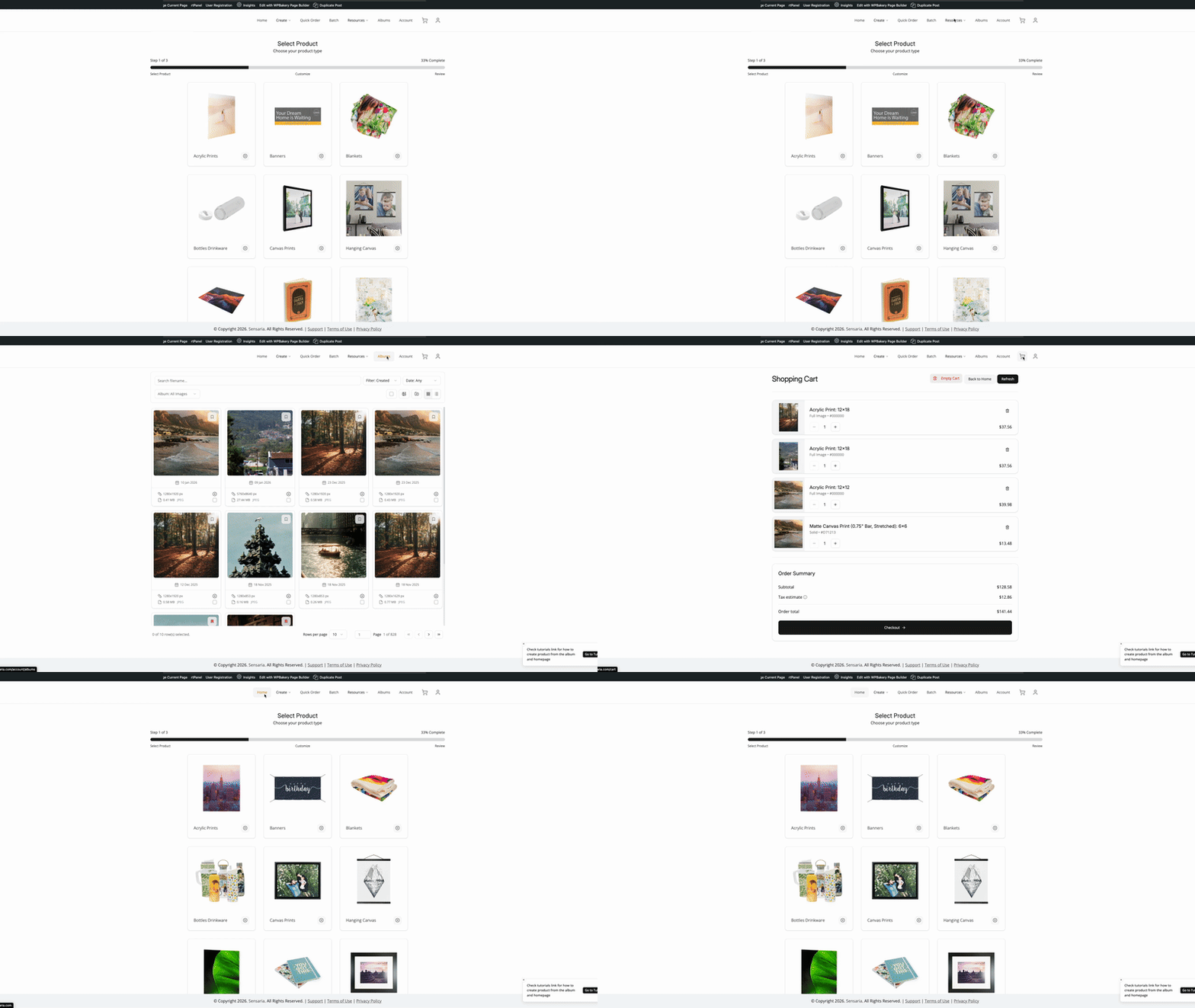
💡 Why Not Just Refactor the Old Code?
Refactoring a legacy codebase with 100,000+ lines is a trap. 📜🪤 It would have taken months or even a year, and we still wouldn't know if the performance would improve enough.
Instead, we decided to fix the structural issue first. 🛠️ By injecting React, we modernised the core experience immediately and can now refactor the rest piece-by-piece alongside new features.
🚀 Wrapping It Up
This project proves that big improvements don’t always require massive rewrites. ✨ By focusing on strategic injection and a hybrid routing system, we’ve transformed a 12-year-old monolith into a modern, performant application.
Instead of fighting the old system, we built a bridge to the new one—delivering a better user experience without losing a decade of business logic. 🌉
And if you’re currently hyperventilating about SEO rankings, take a breath: every single page we migrated is strictly for authenticated users, and last I checked, Google’s crawler hasn't quite figured out how to bypass a login screen just yet 🙄.